Below is an article that struck me, not just as trendy journalism or a cool list (I'm a big fan of lists), but as something that rings true in so many ways. Not to let this guy speak for every man, but I think, in general, he's got the right idea--one that's so right most men can relate. It isn't very often that a man's caveman side is brought out in any way other than to make fun of it, but here Mr. Chiarella shows some of the more elegant aspects of our primordial past, and blends it with other, not-so-well-known subtleties and charms that are important in being a Man. Not all items will fit every man, but the effort is well made.
This article was reprinted with permission from Esquire by MSN (here; other cool lists there as well), and then by me...ahem...without permission. [I live in fear of link-rot. I consider it a testament to the things I choose to provide links to that I wish, should they ever disappear from their original locations, to have them remain in some place, even if that place is solely to provide that link in a personal context.] For what it's worth, I tallied these things into three categories: Yes, Probably, and No Way. Without telling you which items went where, I was 51-11-13. Not too shabby.
As a side note (or maybe the main note?), Tom Chiarella is worth looking up, and probably giving some of your money to via the local bookstore (or Amazon.com, if you must). Here's a good start: Google results.
* * * * *
The 75 Skills Every Man Should Master
A man can be expert in nothing, but he must be practiced in many things. Skills. You don't have to master them all at once. You simply have to collect and develop a certain number of skills as the years tick by. People count on you to come through. That's why you need these, to start.
By Tom Chiarella
A Man Should Be Able To:
1. Give advice that matters in one sentence. I got run out of a job I liked once, and while it was happening, a guy stopped me in the hall. Smart guy, but prone to saying too much. I braced myself. I didn't want to hear it. I needed a white knight, and I knew it wasn't him. He just sighed and said: When nobody has your back, you gotta move your back. Then he walked away. Best advice I ever got. One sentence.
2. Tell if someone is lying. Everyone has his theory. Pick one, test it. Choose the tells that work for you. I like these: Liars change the subject quickly. Liars look up and to their right when they speak. Liars use fewer contractions. Liars will sometimes stare straight at you and employ a dead face. Liars never touch their chest or heart except self-consciously. Liars place objects between themselves and you during a conversation.
3. Take a photo. Fill the frame.
4. Score a baseball game. Scoring a game is an exercise in ciphering, creating a shorthand of your very own. In this way, it's a private language as much as a record of the game. The only given is the numbering of the positions and the use of the diamond to express each batter's progress around the bases. I black out the diamond when a run scores. I mark an RBI with a tally mark in the upper-right-hand corner. Each time you score a game, you pick up on new elements to track: pitch count, balls and strikes, foul balls. It doesn't matter that this information is available on the Internet in real time. Scoring a game is about bearing witness, expanding your own ability to observe.
5. Name a book that matters. The Catcher in the Rye does not matter. Not really. You gotta read.
6. Know at least one musical group as well as is possible. One guy at your table knows where Cobain was born and who his high school English teacher was. Another guy can argue the elegant extended trope of Liquid Swords with GZA himself. This is how it should be. Music does not demand agreement. Rilo Kiley. Nina Simone. Whitesnake. Fugazi. Otis Redding. Whatever. Choose. Nobody likes a know-it-all, because 1) you can't know it all and 2) music offers distinct and private lessons. So pick one. Except Rilo Kiley. I heard they broke up.
7. Cook meat somewhere other than the grill. Buy The Way to Cook, by Julia Child. Try roasting. Braising. Broiling. Slow-cooking. Pan searing. Think ragouts, fricassees, stews. All of this will force you to understand the functionality of different cuts. In the end, grilling will be a choice rather than a chore, and your Weber will become a tool rather than a piece of weekend entertainment.
8. Not monopolize the conversation.
9. Write a letter. So easy. So easily forgotten. A five-paragraph structure works pretty well: Tell why you're writing. Offer details. Ask questions. Give news. Add a specific memory or two. If your handwriting is terrible, type. Always close formally.
10. Buy a suit. Avoid bargains. Know your likes, your dislikes, and what you need it for (work, funerals, court). Squeeze the fabric — if it bounces back with little or no sign of wrinkling, that means it's good, sturdy material. And tug the buttons gently. If they feel loose or wobbly, that means they're probably coming off sooner rather than later. The jacket's shoulder pads are supposed to square with your shoulders; if they droop off or leave dents in the cloth, the jacket's too big. The jacket sleeves should never meet the wrist any lower than the base of the thumb — if they do, ask to go down a size. Always get fitted.
11. Swim three different strokes. Doggie paddle doesn't count.
12. Show respect without being a suck-up. Respect the following, in this order: age, experience, record, reputation. Don't mention any of it.
13. Throw a punch. Close enough, but not too close. Swing with your shoulders, not your arm. Long punches rarely land squarely. So forget the roundhouse. You don't have a haymaker. Follow through; don't pop and pull back. The length you give the punch should come in the form of extension after the point of contact. Just remember, the bones in your hand are small and easy to break. You're better off striking hard with the heel of your palm. Or you could buy the guy a beer and talk it out.
14. Chop down a tree. Know your escape path. When the tree starts to fall, use it.
15. Calculate square footage. Width times length.
16. Tie a bow tie.
17. Make one drink, in large batches, very well. When I interviewed for my first job, one of the senior guys had me to his house for a reception. He offered me a cigarette and pointed me to a bowl of whiskey sours, like I was Darrin Stephens and he was Larry Tate. I can still remember that first tight little swallow and my gratitude that I could go back for a refill without looking like a drunk. I came to admire the host over the next decade, but he never gave me the recipe. So I use this:
• For every 750-ml bottle of whiskey (use a decent bourbon or rye), add:
• 6 oz fresh-squeezed, strained lemon juice
• 6 oz simple syrup(mix superfine sugar and water in equal quantities)
To serve: Shake 3 oz per person with ice and strain into chilled cocktail glasses. Garnish with a cherry and an orange slice or, if you're really slick, a float of red wine. (Pour about ½ oz slowly into each glass over the back of a spoon; this is called a New York sour, and it's great.)
18. Speak a foreign language. Pas beaucoup. Mais faites un effort.
19. Approach a woman out of his league. Ever have a shoeshine from a guy you really admire? He works hard enough that he doesn't have to tell stupid jokes; he doesn't stare at your legs; he knows things you don't, but he doesn't talk about them every minute; he doesn't scrape or apologize for his status or his job or the way he is dressed; he does his job confidently and with a quiet relish. That stuff is wildly inviting. Act like that guy.
20. Sew a button.
21. Argue with a European without getting xenophobic or insulting soccer. Once, in our lifetime, much of Europe was approaching cultural and political irrelevance. Then they made like us and banded together into a union of confederated states. So you can always assume that they were simply copying the United States as they now push us to the verge of cultural and political irrelevance.
22. Give a woman an orgasm so that he doesn't have to ask after it. Otherwise, ask after it.
23. Be loyal. You will fail at it. You have already. A man who does not know loyalty, from both ends, does not know men. Loyalty is not a matter of give-and-take: He did me a favor, therefore I owe him one. No. No. No. It is the recognition of a bond, the honoring of a shared history, the reemergence of the vows we make in the tight times. It doesn't mean complete agreement or invisible blood ties. It is a currency of selflessness, given without expectation and capable of the most stellar return.
24. Know his poison, without standing there, pondering like a dope. Brand, amount, style, fast, like so: Booker's, double, neat.
25. Drive an eightpenny nail into a treated two-by-four without thinking about it. Use a contractor's hammer. Swing hard and loose, like a tennis serve.
26. Cast a fishing rod without shrieking or sighing or otherwise admitting defeat.
27. Play gin with an old guy. Old men will try to crush you. They'll drown you in meaningless chatter, tell stories about when they were kids this or in Korea that. Or they'll retreat into a taciturn posture designed to get you to do the talking. They'll note your strategies without mentioning them, keep the stakes at a level they can control, and change up their pace of play just to get you stumbling. You have to do this — play their game, be it dominoes or cribbage or chess. They may have been playing for decades. You take a beating as a means of absorbing the lessons they've learned without taking a lesson. But don't be afraid to take them down. They can handle it.
28. Play go fish with a kid. You don't crush kids. You talk their ear off, make an event out of it, tell them stories about when you were a kid this or in Vegas that. You have to play their game, too, even though they may have been playing only for weeks. Observe. Teach them without once offering a lesson. And don't be afraid to win. They can handle it.
29. Understand quantum physics well enough that he can accept that a quarter might, at some point, pass straight through the table when dropped. Sometimes the laws of physics aren't laws at all. Read The Quantum World: Quantum Physics for Everyone, by Kenneth W. Ford.
30. Feign interest. Good place to start: quantum physics.
31. Make a bed.
32. Describe a glass of wine in one sentence without using the terms nutty, fruity, oaky, finish, or kick. I once stood in a wine store in West Hollywood where the owner described a pinot noir he favored as "a night walk through a wet garden." I bought it. I went to my hotel and drank it by myself, looking at the flickering city with my feet on the windowsill. I don't know which was more right, the wine or the vision that he placed in my head. Point is, it was right.
33. Hit a jump shot in pool. It's not something you use a lot, but when you hit a jump shot, it marks you as a player and briefly impresses women. Make the angle of your cue steeper, aim for the bottommost fraction of the ball, and drive the cue smoothly six inches past the contact point, making steady, downward contact with the felt.
34. Dress a wound. First, stop the bleeding. Apply pressure using a gauze pad. Stay with the pressure. If you can't stop the bleeding, forget the next step, just get to a hospital. Once the bleeding stops, clean the wound. Use water or saline solution; a little soap is good, too. If you can't get the wound clean, then forget the next step, just get to a hospital. Finally, dress the wound. For a laceration, push the edges together and apply a butterfly bandage. For avulsions, where the skin is punctured and pulled back like a trapdoor, push the skin back and use a butterfly. Slather the area in antibacterial ointment. Cover the wound with a gauze pad taped into place. Change that dressing every 12 hours, checking carefully for signs of infection. Better yet, get to a hospital.
35. Jump-start a car (without any drama). Change a flat tire (safely). Change the oil (once).
36. Make three different bets at a craps table. Play the smallest and most poorly labeled areas, the bets where it's visually evident the casino doesn't want you to go. Simply play the pass line; once the point is set, play full odds (this is the only really good bet on the table); and when you want a little more action, tell the crew you want to lay the 4 and the 10 for the minimum bet.
37. Shuffle a deck of cards. I play cards with guys who can't shuffle, and they lose. Always.
38. Tell a joke. Here's one:
Two guys are walking down a dark alley when a mugger approaches them and demands their money. They both grudgingly pull out their wallets and begin taking out their cash. Just then, one guy turns to the other, hands him a bill, and says, "Hey, here's that $20 I owe you."
39. Know when to split his cards in blackjack. Aces. Eights. Always.
40. Speak to an eight-year-old so he will hear. Use his first name. Don't use baby talk. Don't crank up your energy to match his. Ask questions and wait for answers. Follow up. Don't pretend to be interested in Webkinz or Power Rangers or whatever. He's as bored with that sh** as you are. Concentrate instead on seeing the child as a person of his own.
41. Speak to a waiter so he will hear. You don't own the restaurant, so don't act like it. You own the transaction. So don't speak into the menu. Lift your chin. Make eye contact. All restaurants have secrets — let it be known that you expect to see some of them.
42. Talk to a dog so it will hear. Go ahead, use baby talk.
43. Install: a disposal, an electronic thermostat, or a lighting fixture without asking for help. Just turn off the damned main.
44. Ask for help. Guys who refuse to ask for help are the most cursed men of all. The stubborn, the self-possessed, and the distant. The hell with them.
45. Break another man's grip on his wrist. Rotate your arm rapidly in the grip, toward the other guy's thumb.
46. Tell a woman's dress size.
47. Recite one poem from memory. Here you go:
WHEN YOU ARE OLD
When you are old and gray and full of sleep,
And nodding by the fire, take down this book,
And slowly read, and dream of the soft look
Your eyes had once, and of their shadows deep;
How many loved your moments of glad grace,
And loved your beauty with love false or true,
But one man loved the pilgrim soul in you,
And loved the sorrows of your changing face;
And bending down beside the glowing bars,
Murmur, a little sadly, how Love fled
And paced upon the mountains overhead
And hid his face amid a crowd of stars.
—William Butler Yeats
48. Remove a stain. Blot. Always blot.
49. Say no.
50. Fry an egg sunny-side up. Cook until the white appears solid . . . and no longer.
51. Build a campfire.
There are three components:
* The tinder — bone-dry, snappable twigs, about as long as your hand. You need two complete handfuls. Try birch bark; it burns long and hot.
* The kindling — thick as your thumb, long as your forearm, breakable with two hands. You need two armfuls.
* Fuel wood — anything thick and long enough that it can't be broken by hand. It's okay if it's slightly damp. You need a knee-high stack.
Step 1:Light the tinder, turning the pile gently to get air underneath it.
Step 2: Feed the kindling into the emergent fire with some pace.
Step 3: Lay on the fuel wood. Pyramid, the log cabin, what-ever — the idea is to create some kind of structure so that plenty of air gets to the fire.
52. Step into a job no one wants to do. When I was 13, my dad called me into his office at the large urban mall he ran. He was on the phone. What followed was a fairly banal 15-minute conversation, which involved the collection of rent from a store. On and on, droning about store hours and lighting problems. I kept raising my eyebrows, pretending to stand up, and my dad kept waving me down. I could hear only his end, garrulous and unrelenting. He rolled his eyes as the excuses kept coming. His assertions were simple and to the point, like a drumbeat. He wanted the rent. He wanted the store to stay open when the mall was open. Then suddenly, having given the job the time it deserved, he put it to an end. "So if I see your gate down next Sunday afternoon, I'm going to get a drill and stick a goddamn bolt in it and lock you down for the next week, right?" When he hung up, rent collected, he took a deep breath. "I've been dreading that call," he said. "Once a week you gotta try something you never would do if you had the choice. Otherwise, why are you here?" So he gave me that. And this . . .
53. Sometimes, kick some ass.
54. Break up a fight. Work in pairs if possible. Don't get between people initially. Use the back of the collar, pull and urge the person downward. If you can't get him down, work for distance.
55. Point to the north at any time. If you have a watch, you can point the hour hand at the sun. Then find the point directly between the hour hand and the 12. That's south. The opposite direction is, of course, north.
56. Create a play-list in which ten seemingly random songs provide a secret message to one person.
57. Explain what a light-year is. It's the measure of the distance that light travels over 365.25 days.
58. Avoid boredom. You have enough to eat. You can move. This must be acknowledged as a kind of freedom. You don't always have to buy things, put things in your mouth, or be delighted.
59. Write a thank-you note. Make a habit of it. Follow a simple formula like this one: First line is a thesis statement. The second line is evidentiary. The third is a kind of assertion. Close on an uptick.
Thanks for having me over to watch game six. Even though they won, it's clear the Red Sox are a soulless, overmarketed contrivance of Fox TV. Still, I'm awfully happy you have that huge high-def television. Next time, I really will bring beer. Yours,
60. Be brand loyal to at least one product. It tells a lot about who you are and where you came from. Me? I like Hellman's mayonnaise and Genesee beer, which makes me the fleshy, stubbornly upstate ne'er-do-well that I will always be.
61. Cook bacon. Lay out the bacon on a rack on a baking sheet. Bake at 400 degrees for 15 minutes.
62. Hold a baby. Newborns should be wrapped tightly and held against the chest. They like tight spaces (consider their previous circumstances) and rhythmic movements, so hold them snug, tuck them in the crook of your elbow or against the skin of your neck. Rock your hips like you're bored, barely listening to the music at the edge of a wedding reception. No one has to notice except the baby. Don't breathe all over them.
63. Deliver a eulogy. Take the job seriously. It matters. Speak first to the family, then to the outside world. Write it down. Avoid similes. Don't read poetry. Be funny.
64. Know that Christopher Columbus was a son of a bitch. When I was a kid, because I'm Italian and because the Irish guys in my neighborhood were relentless with the beatings on St. Patrick's Day, I loved the very idea of Christopher Columbus. I loved the fact that Irish kids worshipped some gnome who drove all the rats out of Ireland or whatever, whereas my hero was an explorer. Man, I drank the Kool-Aid on that guy. Of course, I later learned that he was a hand-chopping, land-stealing egotist who sold out an entire hemisphere to European avarice. So I left Columbus behind. Your understanding of your heroes must evolve. See Roger Clemens. See Bill Belichick.
65-67. Throw a baseball over-hand with some snap. Throw a football with a tight spiral. Shoot a 12-foot jump shot reliably. If you can't, play more ball.
68. Find his way out of the woods if lost. Note your landmarks — mountains, power lines, the sound of a highway. Look for the sun: It sits in the south; it moves west. Gauge your direction every few minutes. If you're completely stuck, look for a small creek and follow it downstream. Water flows toward larger bodies of water, where people live.
69. Tie a knot. Square knot: left rope over right rope, turn under. Then right rope over left rope. Tuck under. Pull. Or as my pack leader, Dave Kenyon, told me in a Boy Scouts meeting: "Left over right, right over left. What's so f***ing hard about that?"
70. Shake hands. Steady, firm, pump, let go. Use the time to make eye contact, since that's where the social contract begins.
71. Iron a shirt. My uncle Tony the tailor once told me of ironing: Start rough, end gently.
72. Stock an emergency bag for the car. Blanket. Heavy flashlight. Hand warmers. Six bottles of water. Six packs of beef jerky. Atlas. Reflectors. Gloves. Socks. Bandages. Neosporin. Inhaler. Benadryl. Motrin. Hard candy. Telescoping magnet. Screwdriver. Channel-locks. Crescent wrench. Ski hat. Bandanna.
73. Caress a woman's neck. Back of your fingers, in a slow fan.
74. Know some birds. If you can't pay attention to a bird, then you can't learn from detail, you aren't likely to appreciate the beauty of evolution, and you don't have a clue how birdlike your own habits may be. You've been looking at them blindly for years now. Get a guide.
75. Negotiate a better price. Be informed. Know the price of competitors. In a big store, look for a manager. Don't be an a-hole. Use one phrase as your mantra, like "I need a little help with this one." Repeat it, as an invitation to him. Don't beg. Ever. Offer something: your loyalty, your next purchase, even your friendship, and, with the deal done, your gratitude.
Thursday, July 24, 2008


Monday, July 21, 2008
Nature vs. Nature
 |
| http://en.wikipedia.org/wiki/Testosterone |
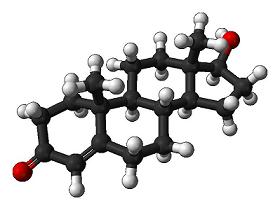
Speaking of root canal, last week was real eye-opening in a particular way. In my brain the last few months has lingered thoughts from a TAL episode called Testosterone, which put into serious jeopardy the idea that I am who I am for inalienable reasons. I learned that this one little chemical, C19H28O2, is an huge player in the everyday game of how I live my life. I asked, as did one man featured in a segment in the episode, how I can really define who I am when so much of the answer depends on the tiny amount of testosterone that is secreted into my blood on a daily basis.
Testosterone is known to control such human impulses as ambition, mental and physical energy, memory, spatial ability, aggression, and (you were waiting for it) libido. So in some respects, a person becomes a different person without it, or with larger or smaller doses of it than one has been accustomed to being. Personalities develop, and the ever-human quest of discovering oneself takes place, in an arena governed in part by our body's chemicals, and big T is a major player in that arena.
A similar epiphany came last week, as a result of the pain I felt pre-root canal, and the sudden relief under the glorious needle of my endodontist. Obviously, a person in pain is much different to interact with than a person who is not. Obviously. Why do we say that? Because we fully understand this, and the reason for it. A pain stimulus is easy to detect: you know when you're in pain (and where, and how much, and sometimes even why). The effect of the stimulus is clear on a person's mood, and therefore his ability to socialize, reason, and react.
So in some respects, a person becomes a different person when they're in pain. Right? Logic shows that, even though this is a much better understood line of reasoning, the effect of pain is much like the effect of testosterone on a person. Right?
So here's my question: who the hell am I? Am I just a biological being, governed by compounds and stimuli and environment? Or am I something more? I believe the answer to be the latter, but in a pure sense. I believe that who I am, the real me, is defined SOLELY by the Divine thing that was installed into this body roughly 36 years ago. However, my access to that thing has mostly eluded me. I haven't yet figured out how to interface with that larger, largest, part of my being that operates this big bulky thing I carry around with me. Is what I believe true, if I cannot even explore this, and therefore not even say who I am in the Divine context? Is the me I show to the world, the person I strive to understand and earn a place among others with, really something more, despite the daily lottery of things that can go wrong inside?
It is at times like this that I must remember what one energy healer once told me: your body is not who you are, it's just a vehicle. And like any vehicle, no matter how noble the trip or how important the driver, sometimes things go wrong. I suppose, in a case like mine, in a week like this, I have to maybe start paying attention to the oil pressure and or something. Otherwise, I'm headed for a wreck only a minor overhaul will fix.
*Disclaimer: I'm neither a biologist nor a psychologist, and I have only a layman's education in theology, and this will not be the last post written in such a confused, inordinate manner. Suck it up, people.
Friday, July 11, 2008
True Tangents
1. So, I've joined Facebook (groan), much to the glee of my wife and friends. Despite my original disdain for such trendy web foofaraw, I am really quite glad I did now, what with all the people I've been able to connect with, and surprisingly, that have opted to connect with me. One feature of Facebook is the groups you can join, and I've found one called "I judge you when you use bad grammar." Browsing the group's photos, I found this lovely thing.

2. I've noticed in my email this past week that there have been a disproportionate amount of excellent words of the day. I mean it: aside from 'meticulous' and 'troglodyte,' the words of the past several days have really been keepers. Check out this list:
condign \kuhn-DINE; KON-dine\, adjective: Suitable to the fault or crime; deserved; adequate.
dapple \DAP-uhl\, noun: 1. A small contrasting spot or blotch. 2. A mottled appearance, especially of the coat of an animal (as a horse). 3. To mark with patches of a color or shade; to spot. 4. To become dappled. 5. Marked with contrasting patches or spots; dappled.
palaver \puh-LAV-uhr; puh-LAH-vur\, noun: 1. Idle talk 2. Talk intended to beguile or deceive. 3. A parley usually between persons of different backgrounds or cultures or levels of sophistication; a talk; hence, a public conference and deliberation. 4. To talk idly. 5. To flatter; to cajole.
emolument \ih-MOL-yuh-muhnt\, noun: The wages or perquisites arising from office, employment, or labor; gain; compensation. (Try throwing that one at your boss at review time!)
contemn \kuhn-TEM\, transitive verb: To regard or treat with disdain or contempt; to scorn; to despise. (I wonder if contemntuous is a proper form; I'll throw it out there and see if people correct me.)
3. Summer is here: the air is hot and so are the beaches. Thank you, Mr. Reard!
4. A company called Valcent Products, Inc. has developed an experimental method of raising algaes that will produce, when harvested, specific grades of oil at amounts 10,000 times greater per acre than corn. Have a look at this video. The last statement will blow you out of the water.

2. I've noticed in my email this past week that there have been a disproportionate amount of excellent words of the day. I mean it: aside from 'meticulous' and 'troglodyte,' the words of the past several days have really been keepers. Check out this list:
condign \kuhn-DINE; KON-dine\, adjective: Suitable to the fault or crime; deserved; adequate.
dapple \DAP-uhl\, noun: 1. A small contrasting spot or blotch. 2. A mottled appearance, especially of the coat of an animal (as a horse). 3. To mark with patches of a color or shade; to spot. 4. To become dappled. 5. Marked with contrasting patches or spots; dappled.
palaver \puh-LAV-uhr; puh-LAH-vur\, noun: 1. Idle talk 2. Talk intended to beguile or deceive. 3. A parley usually between persons of different backgrounds or cultures or levels of sophistication; a talk; hence, a public conference and deliberation. 4. To talk idly. 5. To flatter; to cajole.
emolument \ih-MOL-yuh-muhnt\, noun: The wages or perquisites arising from office, employment, or labor; gain; compensation. (Try throwing that one at your boss at review time!)
contemn \kuhn-TEM\, transitive verb: To regard or treat with disdain or contempt; to scorn; to despise. (I wonder if contemntuous is a proper form; I'll throw it out there and see if people correct me.)
3. Summer is here: the air is hot and so are the beaches. Thank you, Mr. Reard!
4. A company called Valcent Products, Inc. has developed an experimental method of raising algaes that will produce, when harvested, specific grades of oil at amounts 10,000 times greater per acre than corn. Have a look at this video. The last statement will blow you out of the water.
Wednesday, July 9, 2008
Flag Etiquette
As a service to my readers (particularly some who might live in my neighborhood, ahem), and a continuation of my America theme of the week, I present the following content, used with implied permission from the Independence Hall Association. The full page is here.
* * * * *

©2008 ushistory.org
* * * * *
How to Fold the Flag
©2008 ushistory.org
Fold the flag in half width-wise twice. If done by two, then the blue field should be facing the bottom on the first fold. Fold up a triangle, starting at the striped end ... and repeat ... until only the end of the union is exposed. Then fold down the square into a triangle and tuck inside the folds.
• Step-by-step instructions for cadets, boy scouts, etc.
• This animation frame by frame
How to Display the Flag


Commentary on America

As a follow up to my 4th of July post, I'd also like to share a little tidbit I ran across that might fit into the 'my favorite spam' category. As detailed by truthorfiction.com, the businessman/ author/ commentator Craig R. Smith wrote an article on Thanksgiving 2006 in response to some of the more common whining found in America. Not that I've ever complained about something people in other countries might kill for (or be killed for), but I digress.
The original piece is found here, but for the sake of simplicity, and also the fact that it's reproduced in countless other places on the web, I'm putting the entire article below. (Reproduced without permission. Mr. Craig, please contact me and I'll remove it if you ask.)
On a side note, however, I'd like to point out to Mr. Craig, as well as anyone who takes this whole article at face value, that legitimate woe still exists in America, all her benefits aside, and that much of it is related to poverty and lack of means. Grocery stores full of abundance are amazing on the world level, but when you only have enough food stamps for twenty days worth of food, and you don't get another allotment until next month, something is wrong with the system. (We can argue about the opportunities available in America later.) That said, read on.
* * * * *
Made in the USA: Spoiled brats
Posted: November 20, 2006
1:00 am Eastern
By Craig R. Smith
© 2008
The other day I was reading Newsweek magazine and came across some poll data I found rather hard to believe. It must be true given the source, right? The same magazine that employs Michael (Qurans in the toilets at Gitmo) Isikoff. Here I promised myself this week I would be nice and I start off in this way. Oh what a mean man I am.
The Newsweek poll alleges that 67 percent of Americans are unhappy with the direction the country is headed and 69 percent of the country is unhappy with the performance of the president. In essence 2/3's of the citizenry just ain't happy and want a change.
So being the knuckle dragger I am, I starting thinking, "What we are so unhappy about?"
Is it that we have electricity and running water 24 hours a day, 7 days a week? Is our unhappiness the result of having air conditioning in the summer and heating in the winter? Could it be that 95.4 percent of these unhappy folks have a job? Maybe it is the ability to walk into a grocery store at any time and see more food in moments than Darfur has seen in the last year?
Maybe it is the ability to drive from the Pacific Ocean to the Atlantic Ocean without having to present identification papers as we move through each state? Or possibly the hundreds of clean and safe motels we would find along the way that can provide temporary shelter? I guess having thousands of restaurants with varying cuisine from around the world is just not good enough. Or could it be that when we wreck our car, emergency workers show up and provide services to help all involved. Whether you are rich or poor they treat your wounds and even, if necessary, send a helicopter to take you to the hospital.
Perhaps you are one of the 70 percent of Americans who own a home, you may be upset with knowing that in the unfortunate case of having a fire, a group of trained firefighters will appear in moments and use top notch equipment to extinguish the flames thus saving you, your family and your belongings. Or if, while at home watching one of your many flat screen TVs, a burglar or prowler intrudes; an officer equipped with a gun and a bullet-proof vest will come to defend you and your family against attack or loss. This all in the backdrop of a neighborhood free of bombs or militias raping and pillaging the residents. Neighborhoods where 90 percent of teenagers own cell phones and computers.
How about the complete religious, social and political freedoms we enjoy that are the envy of everyone in the world? Maybe that is what has 67 percent of you folks unhappy.
Fact is, we are the largest group of ungrateful, spoiled brats the world has ever seen. No wonder the world loves the U.S. yet has a great disdain for its citizens. They see us for what we are. The most blessed people in the world who do nothing but complain about what we don't have and what we hate about the country instead of thanking the good Lord we live here.
I know, I know. What about the president who took us into war and has no plan to get us out? The president who has a measly 31 percent approval rating? Is this the same president who guided the nation in the dark days after 9/11? The president that cut taxes to bring an economy out of recession? Could this be the same guy who has been called every name in the book for succeeding in keeping all the spoiled brats safe from terrorist attacks? The commander in chief of an all-volunteer army that is out there defending you and me?
Make no mistake about it. The troops in Iraq and Afghanistan have volunteered to serve, and in many cases have died for your freedom. There is currently no draft in this country. They didn't have to go. They are able to refuse to go and end up with either a "general" discharge, an "other than honorable" discharge or, worst case scenario, a "dishonorable" discharge after a few days in the brig.
So why then the flat out discontentment in the minds of 69 percent of Americans? Say what you want but I blame it on the media. If it bleeds it leads and they specialize in bad news. Everybody will watch a car crash with blood and guts. How many will watch kids selling lemonade at the corner? The media knows this and media outlets are for-profit corporations. They offer what sells. Just ask why they are going to allow a murderer like O.J. Simpson to write a book and do a TV special about how he didn't kill his wife but if he did … insane!
Stop buying the negative venom you are fed everyday by the media. Shut off the TV, burn Newsweek, and use the New York Times for the bottom of your bird cage. Then start being grateful for all we have as a country. There is exponentially more good than bad.
I close with one of my favorite quotes from B.C. Forbes in 1953:
"What have Americans to be thankful for? More than any other people on the earth, we enjoy complete religious freedom, political freedom, social freedom. Our liberties are sacredly safeguarded by the Constitution of the United States, 'the most wonderful work ever struck off at a given time by the brain and purpose of man.' Yes, we Americans of today have been bequeathed a noble heritage. Let us pray that we may hand it down unsullied to our children and theirs."
I suggest this Thanksgiving we sit back and count our blessings for all we have. If we don't, what we have will be taken away. Then we will have to explain to future generations why we squandered such blessing and abundance. If we are not careful this generation will be known as the "greediest and most ungrateful generation." A far cry from the proud Americans of the "greatest generation" who left us an untarnished legacy.
Friday, July 4, 2008
The Big '232'

Happy birthday, America.
Alright, snicker away. It was cheesy when I saw it on the bowling alley sign, and it's cheesy now. I've been teased for much cheesier things. Ang guess what? I don't really care.
Being an American is something I'm quietly but solidly proud of. I realize I take a lot for granted as an American. I didn't choose this citizenship, I was born here. I've never lived outside the country; I don't even have a passport (and being a resident of Michigan, having been to Canada doesn't count as leaving the US). I don't have a degree in political science; I barely even watch CNN. I'm very willing to admit that I'm pretty ignorant of the advantages being an American has afforded me. And 'cause I'm a nice guy, just this once, I'll open up the comments for y'all to tell me just how lucky I am, because, well...I believe you. Just call me Forrest Gump.
I am proud of the ideals on which this country was built, and continues (most of the time) to be run. I'm proud of our rugged heritage, our multiculturalism, and our historical take-no-crap attitude. I'm proud that the United States has helped keep the world free from tyranny, in whatever person or form it may manifest itself. I'm proud that I can go anywhere in this country and enjoy the same freedoms, and I'm proud that I can choose another state to live in if I don't like Michigan's laws on guns, gambling, smoking, taxes, capital punishment, or even divorce. I'm proud that I can express my dissatisfaction when and how I want to. I'm proud that through our government system, I have an equal voice in deciding what laws are passed or struck down, and in who will represent me and my personal beliefs all the way to the three main branches of government. And I'm proud that I have that voice regardless of who my parents are, how much property I own, where I was raised, what my gender and race are, what language I speak, who I consort with, how much education I have, and whether I've served in the military.
We can take turns bashing America over lots of different things, and lots of people do every day. America has lots of faults, past and present. The place isn't perfect, our laws aren't perfect, and our presidents aren't perfect (some are more imperfect than others). But today let's focus not on what we don't have, but celebrate what we do, and be thankful for it.
Tuesday, June 17, 2008
One-Man Mob Mentality
Here's a good draft of something I realized a few days after writing that I'd heard before. Something about straws and a camel. I suppose by reinventing this wheel, I understand it better than the old model.
Everyone's heard stories of terrible events of human failure: the riots, looting, and general mass hysteria that can overtake an everyday, otherwise law-abiding member of any civilized culture. Wikipedia calls it 'herd behavior' and lists dozens of synonymous references, including bandwagon effect, crowd psychology, mob rule, swarm intelligence, and spontaneous [dis]order. But whatever anyone calls it, regardless of whether or not they've ever been caught up in it, everyone understands how it works.
I've run across a similar phenomenon that only requires a single person, and it works in a manner very similar to what we already understand. I'm calling it the One-Man Mob Mentality, or OMMM. It begins with a person being mildly annoying. If someone is grossly annoying, OMMM will not set in because any behavior that is obviously out of order will immediately draw attention to social boundaries no matter how vague or subtle. When the social offense is obvious, it is reacted to without acceptance. In order for OMMM to occur, it is important that no clear lines are crossed, and that annoying behavior is accepted on at least a probationary basis.
Now, anyone over age 10 who's ever encountered another human being will tell you that folks can be annoying, and once a person has annoyed you, you begin to make certain allowances for them. Like a rude person in a crowd, you simply start moving out of their way as they approach. Because, as Frost wrote, good fences make good neighbors, good manners dictate that we simply put up with the things some folks dish out, and therefore pretend not to be annoyed at the small things people will sometimes do.
Before I go any further, let's put this right out there: everyone has benefited from this social tendency at one time or another. Every first impression makes use of this unspoken practice. Everyone has, at one time or another, depended on exactly this reaction by others to something they unwittingly say or do, or don't realize is offensive or disruptive.
A critical part of this human interaction is the understanding that everyone does it, on both sides, and so paying attention to what you might do that mildly annoys others becomes very important. It's how you give room back. By this constant give and take process, an equilibrium can be formed between two individuals, an individual and a group, or even a convergence of several groups. As each member gives and takes to find his or her place in a micro-society such as the workplace, a dinner table with strangers, a line for concert tickets or the Sears checkout, or even a family welcoming new members, they learn to put up with each other in a very necessary way.
And that, I think, is exactly why we react that way to others when we're mildly annoyed with them. It's a big world. If we don't make some room for each other, we eventually start killing each other.
So as we move through our day-to-day interactions with each other, we do make small bits of room for those people who we have yet to understand, or at least build a tolerance or appreciation for. Sometimes, however, this process doesn't come to its logical end. Sometimes, it cascades into a catastrophic loop of insanity that makes us want to tear someone's arms out. This is OMMM, and this is how it happens.
Small annoyances that do not push the envelope are tolerated. However, instead of participating in the mutual give-take process, the annoying person doesn't return that favor of giving a little back, curtailing the annoying behavior or at least making up for it with something likable or (in the absence of anything likable) respectable. (This could be a sense of humor, a willingness to help or learn, any amount of humility, or some kind of expertise that applies to the group.) A first offense is treated as an additional mild annoyance, and more space is usually afforded to the annoying person, usually with the same reaction. Occasionally, the Annoyer can not only fail to respond in a way that will gain his or her acceptance, but make it worse with a sense of entitlement. This usually manifests by reacting as though the social space made for him or her by others is deserved, and need not be either acknowledged or returned in any way. (People with Ph.D's are infamous for this social flaw*.)
Once the series of small annoyances begins without any return, we start to build a case for disliking everything else the person does, even if, when others do it, it is in no way annoying. Examples can be the way someone walks, wears their hair, writes or says a phrase, engages in a habit, or fidgets. In this way, that original list of annoyances that we made room for becomes like a mob, driving us in a way that only chanting and mass hysteria can. Our brains rail for any response, and before long, we realize we've crossed way into the space that defines the lines of acceptable boundaries, and beyond. It is here that we find ourselves in that virtual riot, abandoning all good social sense, looting anything that might have once been salvaged in the relationship between ourselves and the Annoyer. This, my friends, is the One-Man Mob Mentality.
* This remark does not apply to any of the wonderful doctorate-holding people with whom I share my work day, or may at one time have been related to. Thag you very buch.
* * * * *
Everyone's heard stories of terrible events of human failure: the riots, looting, and general mass hysteria that can overtake an everyday, otherwise law-abiding member of any civilized culture. Wikipedia calls it 'herd behavior' and lists dozens of synonymous references, including bandwagon effect, crowd psychology, mob rule, swarm intelligence, and spontaneous [dis]order. But whatever anyone calls it, regardless of whether or not they've ever been caught up in it, everyone understands how it works.
I've run across a similar phenomenon that only requires a single person, and it works in a manner very similar to what we already understand. I'm calling it the One-Man Mob Mentality, or OMMM. It begins with a person being mildly annoying. If someone is grossly annoying, OMMM will not set in because any behavior that is obviously out of order will immediately draw attention to social boundaries no matter how vague or subtle. When the social offense is obvious, it is reacted to without acceptance. In order for OMMM to occur, it is important that no clear lines are crossed, and that annoying behavior is accepted on at least a probationary basis.
Now, anyone over age 10 who's ever encountered another human being will tell you that folks can be annoying, and once a person has annoyed you, you begin to make certain allowances for them. Like a rude person in a crowd, you simply start moving out of their way as they approach. Because, as Frost wrote, good fences make good neighbors, good manners dictate that we simply put up with the things some folks dish out, and therefore pretend not to be annoyed at the small things people will sometimes do.
Before I go any further, let's put this right out there: everyone has benefited from this social tendency at one time or another. Every first impression makes use of this unspoken practice. Everyone has, at one time or another, depended on exactly this reaction by others to something they unwittingly say or do, or don't realize is offensive or disruptive.
A critical part of this human interaction is the understanding that everyone does it, on both sides, and so paying attention to what you might do that mildly annoys others becomes very important. It's how you give room back. By this constant give and take process, an equilibrium can be formed between two individuals, an individual and a group, or even a convergence of several groups. As each member gives and takes to find his or her place in a micro-society such as the workplace, a dinner table with strangers, a line for concert tickets or the Sears checkout, or even a family welcoming new members, they learn to put up with each other in a very necessary way.
And that, I think, is exactly why we react that way to others when we're mildly annoyed with them. It's a big world. If we don't make some room for each other, we eventually start killing each other.
So as we move through our day-to-day interactions with each other, we do make small bits of room for those people who we have yet to understand, or at least build a tolerance or appreciation for. Sometimes, however, this process doesn't come to its logical end. Sometimes, it cascades into a catastrophic loop of insanity that makes us want to tear someone's arms out. This is OMMM, and this is how it happens.
Small annoyances that do not push the envelope are tolerated. However, instead of participating in the mutual give-take process, the annoying person doesn't return that favor of giving a little back, curtailing the annoying behavior or at least making up for it with something likable or (in the absence of anything likable) respectable. (This could be a sense of humor, a willingness to help or learn, any amount of humility, or some kind of expertise that applies to the group.) A first offense is treated as an additional mild annoyance, and more space is usually afforded to the annoying person, usually with the same reaction. Occasionally, the Annoyer can not only fail to respond in a way that will gain his or her acceptance, but make it worse with a sense of entitlement. This usually manifests by reacting as though the social space made for him or her by others is deserved, and need not be either acknowledged or returned in any way. (People with Ph.D's are infamous for this social flaw*.)
Once the series of small annoyances begins without any return, we start to build a case for disliking everything else the person does, even if, when others do it, it is in no way annoying. Examples can be the way someone walks, wears their hair, writes or says a phrase, engages in a habit, or fidgets. In this way, that original list of annoyances that we made room for becomes like a mob, driving us in a way that only chanting and mass hysteria can. Our brains rail for any response, and before long, we realize we've crossed way into the space that defines the lines of acceptable boundaries, and beyond. It is here that we find ourselves in that virtual riot, abandoning all good social sense, looting anything that might have once been salvaged in the relationship between ourselves and the Annoyer. This, my friends, is the One-Man Mob Mentality.
* This remark does not apply to any of the wonderful doctorate-holding people with whom I share my work day, or may at one time have been related to. Thag you very buch.
Monday, June 16, 2008
Dads and Kids
This is a difficult week for me.
My first Father's Day after my dad's death wasn't particularly peachy. Yes, it had most of the usual accouterments, not including breakfast in bed (due to 1. my stupid cat scratching at the door over and over in the middle of the night, and 2. my boy coming into the room at 3:30am and puking shortly thereafter), but all things considered it was your normal day of paternal tribute...with one exception: my dad.
I'm still adjusting to not having him around. I miss him. The saddest part about this is, if he'd never gotten sick, if he'd never died, I might have gone this long without seeing or really talking to him anyway, and not really thought much about it. Now that he is gone, I find myself needing him more and more, and realizing that in fact, I always needed him this much, and was always too proud, or too afraid of some reaction, or too busy to let him know it. Or to acknowledge it for myself.
A good friend shared an essay by Steve Martin with me that provided some much needed perspective. Like Steve's, my dad was very critical, angry all the time, and prone to offend any number of surrounding people at any time without warning. I also, at one point, decided I officially hated him, that I wanted him to....not die, but just...be gone from our lives so many times as a young child, so disruptive was his presence in the small world of my mom and us little kids.
However, Steve indicates that the memories of the terrible persisted until a good long time after his father's death, after which point, he "recall[ed] events that seem to contradict [his] memory of him." The same thing is starting to happen to me, but in reverse. Maybe it was my dad's long sickness that started the process of forgetting the terrible, but almost immediately after his death, I internally canonized him, carving out this huge emotional construct by which I could use my memories of him to channel my own life in a direction he'd approve of. Although I can't recall any long list of great things he did for me at this or that age, I do have trouble remembering all the things I didn't like about him, all the things that made it hurt to be his son.
Maybe that's okay. Maybe that's why I did actually write down good and bad in my pre-death posts, because I knew that not only would I forget the upsetting things, but that even those things would become fond memories after his passing. Not fond like finding a Red Rider BB gun under the tree on Christmas morning, but fond like hugging a grouchy old man because you're happy he's your dad, even if he's not always your favorite guy in the world.
The other reason this is a difficult week for me is because in only a few short days I am sending my two wonderful girls home to their families in Germany and Indonesia. Sending an exchange student home is something we've already done once, and it was hard, but he's a boy, and he didn't show his emotions, and I gave him a very manly hug and wished him well, and we watched him walk toward security until Sophia ran to him and hugged him again, and then we all cried as if in a movie. But this time will be different, because girls are...well, different. I bonded with Santos in many ways, and I still consider him mijo, but the bond between man and daughter is a strange, mysterious, and beautiful thing. I do not really understand it, Sophia being only five so far, but I know its effects fully. And now I know them triple fold. And in just a few days, two of my girls will go off into the world. Although (yes, I know) they're going back to a family and culture and world they're far more familiar with than this one we've shared with them, it is nevertheless a family and culture and world without US, and they leave our home without THEM, and that loss will be felt a very long time. Fortunately, the joy we have had while they have been here will last even longer, as we have found with Santos, and knowing the three of them are out there in the world, little pieces of us in them, and them in us, makes that joy last forever.
My first Father's Day after my dad's death wasn't particularly peachy. Yes, it had most of the usual accouterments, not including breakfast in bed (due to 1. my stupid cat scratching at the door over and over in the middle of the night, and 2. my boy coming into the room at 3:30am and puking shortly thereafter), but all things considered it was your normal day of paternal tribute...with one exception: my dad.
I'm still adjusting to not having him around. I miss him. The saddest part about this is, if he'd never gotten sick, if he'd never died, I might have gone this long without seeing or really talking to him anyway, and not really thought much about it. Now that he is gone, I find myself needing him more and more, and realizing that in fact, I always needed him this much, and was always too proud, or too afraid of some reaction, or too busy to let him know it. Or to acknowledge it for myself.
A good friend shared an essay by Steve Martin with me that provided some much needed perspective. Like Steve's, my dad was very critical, angry all the time, and prone to offend any number of surrounding people at any time without warning. I also, at one point, decided I officially hated him, that I wanted him to....not die, but just...be gone from our lives so many times as a young child, so disruptive was his presence in the small world of my mom and us little kids.
However, Steve indicates that the memories of the terrible persisted until a good long time after his father's death, after which point, he "recall[ed] events that seem to contradict [his] memory of him." The same thing is starting to happen to me, but in reverse. Maybe it was my dad's long sickness that started the process of forgetting the terrible, but almost immediately after his death, I internally canonized him, carving out this huge emotional construct by which I could use my memories of him to channel my own life in a direction he'd approve of. Although I can't recall any long list of great things he did for me at this or that age, I do have trouble remembering all the things I didn't like about him, all the things that made it hurt to be his son.
Maybe that's okay. Maybe that's why I did actually write down good and bad in my pre-death posts, because I knew that not only would I forget the upsetting things, but that even those things would become fond memories after his passing. Not fond like finding a Red Rider BB gun under the tree on Christmas morning, but fond like hugging a grouchy old man because you're happy he's your dad, even if he's not always your favorite guy in the world.
The other reason this is a difficult week for me is because in only a few short days I am sending my two wonderful girls home to their families in Germany and Indonesia. Sending an exchange student home is something we've already done once, and it was hard, but he's a boy, and he didn't show his emotions, and I gave him a very manly hug and wished him well, and we watched him walk toward security until Sophia ran to him and hugged him again, and then we all cried as if in a movie. But this time will be different, because girls are...well, different. I bonded with Santos in many ways, and I still consider him mijo, but the bond between man and daughter is a strange, mysterious, and beautiful thing. I do not really understand it, Sophia being only five so far, but I know its effects fully. And now I know them triple fold. And in just a few days, two of my girls will go off into the world. Although (yes, I know) they're going back to a family and culture and world they're far more familiar with than this one we've shared with them, it is nevertheless a family and culture and world without US, and they leave our home without THEM, and that loss will be felt a very long time. Fortunately, the joy we have had while they have been here will last even longer, as we have found with Santos, and knowing the three of them are out there in the world, little pieces of us in them, and them in us, makes that joy last forever.
Wednesday, June 4, 2008
My Wife's World-Saving Discovery
 Bureau of Justice statistics show that the state prison populations increased an average of nearly 6% between 1980 and 2004 for violent, property, drug, and public order crimes. Actual figures show an increase of almost 1 million prisoners during the study period, an average of 50,000 people per year.
That's a lot of people getting busted, and if the iceberg rule applies, it means there are millions more who contemplate crimes that would lead to imprisonment. Fortunately, my wife has stumbled upon a product that can help save our nation from this dilemma, not only halting the rapid increase in prison population, but ultimately reducing it to record low numbers.
What is this product, you might ask? Nothing complicated, nothing expensive--nothing short of a miracle, I say. It's simply this: Kroger brand toilet paper. Every bathroom in our house is currently stocked with this product, and I can tell you with great assuredness that I need not spend the weekend with beer and burritos to fear its use. The abrasive quality of this bathroom tissue is second only to 80 grit sandpaper, and the effect it would have on a prison population forced to use it exclusively would be excruciating.
This is a breakthrough tantamount to Bentham's panopticon. Faced with the prospect of wiping one's tender ass with this and only this paper ought to be enough to make any would-be perpetrator think twice about committing a crime. Think of the affect it would have on our mounting prison population. Replacing every roll of bath tissue currently in the prisons with this generic and abundant product could be done at nearly no cost to taxpayers while simultaneously boosting local economies as more of the paper is produced for a population currently numbering 1.3 million.
Utilizing a series of scientific and statistical techniques, it's my estimation that this simple change in the prison system could yield an overall population decrease of over 92% in the next 18 years. My conclusions are based on the following assumptions:
- the prison population will have grown at the current average between 2004 and 2009
- the new toilet paper will be introduced at some time during 2009
- as word spreads about this new deterrent, the population will begin to decrease
- initial decrease will be at the current average level of increase (5.86%)
- as the horror stories are circulated, average population decrease will get 10% greater each year
So now's the time to take action. Write your state governments and show them the numbers. Purchase and send a roll to your congressman for good measure. With enough good people doing the right thing, we can change the world, folks, and it begins with a single wipe.
Thursday, May 22, 2008
Suffering and Charity
My mother in law is dying.
Right around the time my dad was diagnosed with his cancer last fall, so was she with hers. The alarm of the "C" word notwithstanding, we weren't surprised that she was sick; she hadn't been to a doctor since my wife was born, and frankly never really took great care of herself. We were all a bit worried most of the time about how she was doing: her knees, her diet, her habits, etc. There was talk about diabetes, for example, but it went in and out of family talk like a bad rumor. When you asked about this or anything else health-related, you'd get the patented topic change my mom-in-law has always been the master of. Even now, days after hospice care has begun, we're scrambling to notify cousins because she insisted everyone be kept in the dark. If it's true that you're only as sick as your secrets, this woman has been doomed a very long time.
At first, she, and to some extent, everyone else (except my father in law, who by now has probably worried himself into his own health crisis), pretended that everything would be fine. What with the family practice of denial in full effect, and my dad's rapid and obvious decline going on at the same time, it was hard not to. Indeed, at first it seemed everything would be fine. She made it through three rounds of progressively ass-kicking chemotherapy, and survived. She made it through a mastectomy, related 'body work,' and subsequent rehabilitation, and survived. In fact, she not only survived these steps, she was recovering. Hair returning, alert and volatile as ever, her prospects were good as little as a week ago.
And then something changed. Whether it was a creeping problem that only just crossed the line into dangerous, or something new and truly awful, we'll probably never know. She was no longer lucid and her body began to shut down. Discussions were had, decisions were made, and now it's this sad, terrible waiting game. Everyone's sort of on call for...the inevitable...and this makes everyday life hard to get through. Work, kids' school schedules and homework, a pending 17th birthday, and everything else routine about your life fades into the background of this looming event, not to mention the effort to make every last minute count for something. I know from my own experience that even the dull, mundane moments spent with a dying loved one become monumental (at least in memory) after the person passes, and I'm making every effort to afford my wife as many of them as she can stand. It's a terrible way to exist, and a terrible way to die.
Dhiara, our Indonesian exchange student, and my third daughter, told me that her culture, which is predominantly Muslim, has very different views on this existence. When you're struggling to make every day count, and seem as normal as possible to three small kids, and operate your own life because you really have no choice, without allowing the impending death to take over your life, you're pretending. It's the kind of pretending that children do, and it necessarily involves selective denial of hard fact and emotional distress to facilitate "normal mode." There's something terrible and unnatural to it, and yet everyone must do it at some point. Despite my inner discomfort with the whole idea, before Dhiara said this, it never once occurred to me that anyone would do anything different. Although I'm not yet clear on the Muslim/Indonesian way, I do believe it may be worth looking into. I don't care how much suffering and endurance are part of the Christian way of doing living (and, ahem, dying), there must be a better way to care for yourself and your dying loved one.
And yet, everything is not terrible. Normal mode is a welcome relief sometimes, even with selective denial nagging at my conscience. I'm lucky enough to have a job and boss that is family-friendly, and well aware that the only reason we all come to work is to gain means to provide a quality life for ourselves and our families; job fulfillment is a desirable side effect but not necessarily the goal. And church has kicked in, today letting me know that there's a committee of women organizing dinner for the next week for our family. Of course, it's much more than some committee: it's people we've known for years, people we've trusted with the care of our children, people we've cried and laughed with, people whose children I've read to and made snacks for and played trains with on Sunday mornings.
It's sort of sad that it takes an event like this for me to realize that our family is not completely alone, that it's okay to need, or at least accept, help. It opens my eyes to things my worldly experience makes me forget: charity, kindness, friendship. It's only a short step away to remember that these are all expressions of love, and that's something I am still learning how to accept and express in many ways. For now, I will simply appreciate it and be thankful, and direct the energy it saves me to my wife, who is about to undergo a very painful experience, and will need all the love I can give her.
Your prayers are appreciated.
SCW
Right around the time my dad was diagnosed with his cancer last fall, so was she with hers. The alarm of the "C" word notwithstanding, we weren't surprised that she was sick; she hadn't been to a doctor since my wife was born, and frankly never really took great care of herself. We were all a bit worried most of the time about how she was doing: her knees, her diet, her habits, etc. There was talk about diabetes, for example, but it went in and out of family talk like a bad rumor. When you asked about this or anything else health-related, you'd get the patented topic change my mom-in-law has always been the master of. Even now, days after hospice care has begun, we're scrambling to notify cousins because she insisted everyone be kept in the dark. If it's true that you're only as sick as your secrets, this woman has been doomed a very long time.
At first, she, and to some extent, everyone else (except my father in law, who by now has probably worried himself into his own health crisis), pretended that everything would be fine. What with the family practice of denial in full effect, and my dad's rapid and obvious decline going on at the same time, it was hard not to. Indeed, at first it seemed everything would be fine. She made it through three rounds of progressively ass-kicking chemotherapy, and survived. She made it through a mastectomy, related 'body work,' and subsequent rehabilitation, and survived. In fact, she not only survived these steps, she was recovering. Hair returning, alert and volatile as ever, her prospects were good as little as a week ago.
And then something changed. Whether it was a creeping problem that only just crossed the line into dangerous, or something new and truly awful, we'll probably never know. She was no longer lucid and her body began to shut down. Discussions were had, decisions were made, and now it's this sad, terrible waiting game. Everyone's sort of on call for...the inevitable...and this makes everyday life hard to get through. Work, kids' school schedules and homework, a pending 17th birthday, and everything else routine about your life fades into the background of this looming event, not to mention the effort to make every last minute count for something. I know from my own experience that even the dull, mundane moments spent with a dying loved one become monumental (at least in memory) after the person passes, and I'm making every effort to afford my wife as many of them as she can stand. It's a terrible way to exist, and a terrible way to die.
Dhiara, our Indonesian exchange student, and my third daughter, told me that her culture, which is predominantly Muslim, has very different views on this existence. When you're struggling to make every day count, and seem as normal as possible to three small kids, and operate your own life because you really have no choice, without allowing the impending death to take over your life, you're pretending. It's the kind of pretending that children do, and it necessarily involves selective denial of hard fact and emotional distress to facilitate "normal mode." There's something terrible and unnatural to it, and yet everyone must do it at some point. Despite my inner discomfort with the whole idea, before Dhiara said this, it never once occurred to me that anyone would do anything different. Although I'm not yet clear on the Muslim/Indonesian way, I do believe it may be worth looking into. I don't care how much suffering and endurance are part of the Christian way of doing living (and, ahem, dying), there must be a better way to care for yourself and your dying loved one.
And yet, everything is not terrible. Normal mode is a welcome relief sometimes, even with selective denial nagging at my conscience. I'm lucky enough to have a job and boss that is family-friendly, and well aware that the only reason we all come to work is to gain means to provide a quality life for ourselves and our families; job fulfillment is a desirable side effect but not necessarily the goal. And church has kicked in, today letting me know that there's a committee of women organizing dinner for the next week for our family. Of course, it's much more than some committee: it's people we've known for years, people we've trusted with the care of our children, people we've cried and laughed with, people whose children I've read to and made snacks for and played trains with on Sunday mornings.
It's sort of sad that it takes an event like this for me to realize that our family is not completely alone, that it's okay to need, or at least accept, help. It opens my eyes to things my worldly experience makes me forget: charity, kindness, friendship. It's only a short step away to remember that these are all expressions of love, and that's something I am still learning how to accept and express in many ways. For now, I will simply appreciate it and be thankful, and direct the energy it saves me to my wife, who is about to undergo a very painful experience, and will need all the love I can give her.
Your prayers are appreciated.
SCW
Tuesday, February 19, 2008
Snobs & Bigots
 I'm losing my cool. Aside from the title of this post, I'm going to refrain from expressing any of the thoughts I'm having about the place where I live or the people who run the school district. Instead, I'm going to put the evidence to you, and allow you to decide.
1. An excerpt of an email from our superintendent, 7 February 2007:
"Finally, are we a Schools of Choice district, or will we become one? The answers are emphatically NO and NO. Boards of Education must intentionally and by resolution opt in to that program; ours never has and has no future intention of doing so. It would mean opening our district to all residents of Oakland County on a virtually unrestricted basis, something we know our constituents would not want. So if you hear rumors to that effect, please know that they are without foundation."
2. Last fall, there was an incident where a high school student felt threatened enough to bring a handgun to school. He lost his nerve and threw the weapon in some bushes, where it was recovered. When the district reported the incident and attempted to answer parents' questions, one of them was overwhelmingly whether the group of students threatening the gun-toting kid were residents or tuition-based kids. As it turns out, they were all residents, students at the other high school. (No email excerpt or citation.)
3. Also last fall, there was a fight at a football game, something nearly unheard of in our district. Once again, the district attempted to inform and ease concerns of parents who, once again, eagerly questioned the origin of the students involved. Once again, all were residents of our illustrious and privileged and nationally recognized district. I happened to not only witness the fight, but help break it up, and was surprised that witness's accounts didn't lead to the district some way or another mentioning the student's skin color. (Again, no email excerpt or citation.)
4. The latest offense: Below is the entirety of an email sent today from the assistant principal of a middle school:
"This morning at approximately 7:35 a.m. an East Hills student observed a suspicious vehicle driving through the Heathers Club complex. The student was not approached nor was there an attempt to engage her in conversation. The vehicle was described as a small cream colored compact car driven by an African American male between 40-50 years old. The Bloomfield Township Police department was notified and will continue to investigate the incident."
And my response:
"Ms. [Assistant Principal],
"Forgive my intrusion on your day; an acquaintance of two district principals, I realize you may spend a good portion of your evening responding to the email sent out a few minutes ago regarding the report of a suspicious vehicle in the Heathers Club complex.
"I am mailing you not to express concern about the incident, but about the announcement itself. I was offended at the apparent tone of prejudice, both socioeconomic and racial. While it can be said that nothing in the email is blatantly inappropriate, it's clear that both the student who reported the vehicle and you yourself (and by extension, the BHS District) thought the fact that an older black man driving a compact car through an exclusive upper class neighborhood created an inherent danger. As an intelligent, tolerant person, and as a district resident, this severely disturbs me.
"I am not familiar with the Heathers Club complex, so I cannot say whether the anonymous driver had any right to be on the streets therein, but two particular points in the reported incident bother me: the driver was not on school property, and the student was not approached. I realize and respect the responsibility of you and the District to inform students and parents of dangers, both real and potential, but I am at a loss as to how this incident justifies any such concern.
"The attitude of exclusivity shown here is a dangerous symptom intolerance and ignorance, and I urge you and other District representatives to examine the subtle signs of both that regularly present themselves in the everyday business of the Bloomfield Hills/West Bloomfield area. We cannot afford to pretend these things only exist in less privileged areas, and we cannot raise tolerant, diversity-minded children in any environment where seeing someone who doesn't exactly fit our expectations causes a legitimate safety concern.
"Thanks for your time. Kind Regards,"
(et cetera)
* * * * *
Update 20 Feb 08: I received two responses this morning, one from each recipient of my original email. To paraphrase them, the car in question apparently slowly passed the reporting student, a 6th grade girl, several times, and the driver stared. At one point the car stopped for 2-3 minutes. The girl got scared, which is understandable, and told someone about it. The email was sent on the advice the author's administration and local police. Apologies were profuse, and the word "certainly" was used in each response regarding the intent not to offend. Also, a follow-up email was sent district-wide by the superintendent addressing my concerns and clarifying the situation.
All this is very nice, and does actually justify public notice, but I stand by my assertion of subtle signs. It seems ironic to me that in a community that, united by great forces (wealth and greater-than average education), would like to believe itself risen above the common ignorances that plague society has fallen back one of humankind's greatest flaws: the I'm Better Than You complex.
Another update: names removed.
Tuesday, February 12, 2008
Quick Note to my Coworkers
If you'll take a look, you'll notice there are yellow lines painted on the ground outside our building. A quick estimate and you'll probably find that the spaces between the lines conveniently fit most automobiles. In fact, you could say there are a 'lot' of such 'spaces' you could probably use to place, or let's say 'park,' an automobile in. I've noticed many of you driving automobiles here each day, and wanted to point this out to you. Because, it seems, nobody understands this.
Sure, yes, I know there are big piles of snow at the ends of each row of this 'parking lot.' Some of the yellow lines are covered, and some of the 'parking spaces' aren't big enough for an automobile anymore. But that's really no cause to ignore all the other yellow lines, or the full-width spaces, is it?
Of course not. Have a nice day.
Sure, yes, I know there are big piles of snow at the ends of each row of this 'parking lot.' Some of the yellow lines are covered, and some of the 'parking spaces' aren't big enough for an automobile anymore. But that's really no cause to ignore all the other yellow lines, or the full-width spaces, is it?
Of course not. Have a nice day.
Tuesday, February 5, 2008
Eulogy
 For my dad. November 20, 1944 - January 31, 2008
* * * * *
My dad, Mike Simoni, was many things to many people. He was, in fact, more things than I ever realized during our time together. Today I'd like to tell you some of the things he was to me, and maybe to you, too.
My dad was a generous man. "Give you the shirt off his back" doesn't quite cover it, but "give you the couch from his living room" might come close. He'd buy things for himself only to give them away. Whether you were family, a neighbor, a friend, or a stranger in need, no matter how much or little he had, he would go out of his way to provide for any need he perceived.
My dad was a dreamer. I remember walking to the store with him for lottery tickets, his brief stint with the numbers prediction book s, and all the things he said he'd do when he won "the big one." One of his dreams come true was the property he finally bought up north, where we spent not nearly enough weekends together. Another were the salmon fishing trips he started taking with his buddies from work on the Benzie River. On his doctor's advice, he took his last one in October, despite his cancer diagnosis, then only days old. My dad was a dreamer right to the end: when he first began treatment, he talked about his recovery, about buying a dog and a Cadillac and driving to Arizona.
My dad never lost his sense of wonder. At a very young age, he and my sister and I would sit and watch Nova and Carl Sagan on PBS, and though I was small, probably only a toddler at the time, his awe and mine were equal. The last time I heard the word 'wildebeest' I was probably in his lap. As an outdoorsman, he was always mindful of the beauty around him. He loved and respected nature, and had a connection with the Earth I always admired.
My dad was not an artist, but he had an eye and an ear for the beautiful. He was a gifted gardener, as any of his neighbors can attest to. Despite his almost crippling practicality, he never failed to notice a sunset, the smell or warmth of a campfire, the sound of a salmon jumping in the river, or the beauty of architecture.
My dad was a patriot. He joined the Army at 17 and served six years as a paratrooper, jungle expert, and jump master in the 508th Airborne Infantry Regiment at Fort Kobbe, Panama, in what was then called the Canal Zone. His love of country didn't end with his service, though. He proudly flew his American flag even at the campgrounds, and was only slightly less tolerant than myself when someone displayed it improperly.
My dad was a blue-collar union man. At an early age I learned the meaning of solidarity, and never forgot that organized labor pulled our family through some very hard times. Dad knew the value of hard work, and the worth of an earned dollar. He loathed apathy.
My dad had an ironclad sense of justice. He knew what he thought was right, and never wavered. He stuck to his guns, and his right to bear them. Anyone who was brave enough to debate the man on anything immediately gained the whole family's respect. Sometimes we called him stubborn, but to imagine any of his opinions rooted in spite would fail to acknowledge the solidity of the beliefs he based them on.
My dad was candid to a fault, he said what was on his mind whether you wanted to hear it or know it or not. Sometimes he was rude; sometimes it was on accident, other times not. But no matter what he criticized, it was never malicious. Even when the words hurt, and even when they were wrong, they were always spoken out of a genuine intent to do right and express truth.
Maybe you knew this man I'm talking about. Maybe you recognize some of the things he was.
Maybe you've seen them in yourself.
For my part, I see my dad and all the things he was in me, and in my brother and sister.
I see my dad in the way my sister looks at someone who hurts children. I see him in the way she pursues her own happiness, sometimes even at the expense of her well-being. I see him in her convictions and the way she carries herself despite the odds against her every day.
I see my dad in my brother's committment to excellence, and satisfaction at a job well done. I see him in Joe's tireless pace, his sense of duty, and his love of using the strength of both body and mind to create a beautiful and useful thing.
I see my dad in myself in the way I feel after a day's work in the garden. I see him in my own simple satisfaction at a fire well built and shared with friends. I see him in the way I reprimand myself after a thoughtless unkind word. I see him in way I worry for my children when I reflect upon my own faults.
My dad was not what we usually would call a great man, but he had as great a heart as any hero. He was a man who was always hurting, physically and emotionally, but the pain he felt through life could never squelch his character. Though he suffered an epic betrayal that ultimately destroyed his innocence, his sense of goodness and morality held fast. No matter what he did in life, he gave it his all, and no matter what he loved, he loved fiercely and without refrain.
My dad was a good man: a better man than I knew, and a better man than he allowed himself to believe.
Although my dad is gone, taken from us to a better place, his laughter and his smile are his legacy. His love knew no distinction of family or friend. Let each of us carry him in our hearts, remembering what he was, and what he continues to be for everyone he knew.
I love you, Dad, and I will miss you forever and ever.
Friday, January 25, 2008
Questions
What do you say to a dying man?
What do you say, indeed, to the man who raised you, as he lay helpless in a hospital bed, only able to moan and huff? Do you recount the years of lost childhood? The memories of violent nights? The chair broken on mom's back, or the toy record player thrown down the basement stairs because my sister and I argued over it? The fight over the silk screened jean jacket when I was 17? No, there's no time for anger or bitterness.
Are you supposed to keep it light, sticking only to the topic of what the kids are doing? Are you supposed to reaffirm the promises made two months ago, that we will go fishing together this summer, and work on that fence? Are you supposed to make up for lost time, years upon years of not talking, even over mundane topics? Are you supposed to lay the sap on as thick as it will go? No, this is not a time for falseness.
Are you supposed to take out your shopping list of emotional needs and guilts, unloading each one to a man who cannot respond, and wouldn't know what to say if he could, for the sake of clearing the air? Are you supposed to be serious and dark and of formidable emotional stamina as you discuss the deep meanings of your relationship even as it comes to an untimely end? No, this is not a time for business.
Are you supposed to...?
How many of these questions I've run though my mind in the last 24 hours I'll never know. And more are coming. I don't have any answers to any of them. My conclusions are guesses, arrived at from a combination of gut feeling and TV drama. The conversations I am having with my dad are one way, and I'm not much of a talker. There are almost 35 years of baggage to mull over between us. Both of us are regretful of what we've ignored, and there's no time to remedy any of it, except for me to say that I enjoyed spending time with him this summer, and know he enjoyed it, too.
I spent--we all spent--every visit to my parents' house dreading the leaving moment, watching the time bomb in the easy chair tick tick tick with every red-white-and-blue can to his inevitable breaking point. We even had a signal when the invisible line had been crossed, when the point of no return had been breached, when nothing we said or did or told the kids would change his reactions. We knew then we had only so long to get out of the house before the next time Brendan screamed or Sophia played the piano over the TV audio he'd snap. This is how we always handled things, and when Dad got confused or mad or threw a fit over it we just rolled our eyes and talked about him later at sibling get-togethers.
So now, what do say to this man, after years of circling the threatening fire, daring not to take a burning branch and call it what it was? Sure, I did love him all along, and I learned to accept him the way he was, and (eventually) live a healthy life despite his unhealthy influence. In the last year, I made significantly more effort to get to know him, to not just avoid or work around his addiction and anger, but to stand stalwart as it passed through and around me, in hopes of getting a glimpse of its originator. I am thankful that I made the decision to do this, not because he was dying (even though he was at the time, and none of us knew it), but because it was necessary to finally create a real bond with my father, if not between father and son, then between men. I am both thankful and bitter, because I intended the effort, 100%, to be the beginning of some healing years, not as a requiem to a life of misunderstanding this man who did everything he knew how as best he could, but still came off as a failed and abusive parent.
I am mad as hell that this chance has been taken away from me.
Maybe that's what I need to say, for starters at least.
What do you say, indeed, to the man who raised you, as he lay helpless in a hospital bed, only able to moan and huff? Do you recount the years of lost childhood? The memories of violent nights? The chair broken on mom's back, or the toy record player thrown down the basement stairs because my sister and I argued over it? The fight over the silk screened jean jacket when I was 17? No, there's no time for anger or bitterness.
Are you supposed to keep it light, sticking only to the topic of what the kids are doing? Are you supposed to reaffirm the promises made two months ago, that we will go fishing together this summer, and work on that fence? Are you supposed to make up for lost time, years upon years of not talking, even over mundane topics? Are you supposed to lay the sap on as thick as it will go? No, this is not a time for falseness.
Are you supposed to take out your shopping list of emotional needs and guilts, unloading each one to a man who cannot respond, and wouldn't know what to say if he could, for the sake of clearing the air? Are you supposed to be serious and dark and of formidable emotional stamina as you discuss the deep meanings of your relationship even as it comes to an untimely end? No, this is not a time for business.
Are you supposed to...?
How many of these questions I've run though my mind in the last 24 hours I'll never know. And more are coming. I don't have any answers to any of them. My conclusions are guesses, arrived at from a combination of gut feeling and TV drama. The conversations I am having with my dad are one way, and I'm not much of a talker. There are almost 35 years of baggage to mull over between us. Both of us are regretful of what we've ignored, and there's no time to remedy any of it, except for me to say that I enjoyed spending time with him this summer, and know he enjoyed it, too.
I spent--we all spent--every visit to my parents' house dreading the leaving moment, watching the time bomb in the easy chair tick tick tick with every red-white-and-blue can to his inevitable breaking point. We even had a signal when the invisible line had been crossed, when the point of no return had been breached, when nothing we said or did or told the kids would change his reactions. We knew then we had only so long to get out of the house before the next time Brendan screamed or Sophia played the piano over the TV audio he'd snap. This is how we always handled things, and when Dad got confused or mad or threw a fit over it we just rolled our eyes and talked about him later at sibling get-togethers.
So now, what do say to this man, after years of circling the threatening fire, daring not to take a burning branch and call it what it was? Sure, I did love him all along, and I learned to accept him the way he was, and (eventually) live a healthy life despite his unhealthy influence. In the last year, I made significantly more effort to get to know him, to not just avoid or work around his addiction and anger, but to stand stalwart as it passed through and around me, in hopes of getting a glimpse of its originator. I am thankful that I made the decision to do this, not because he was dying (even though he was at the time, and none of us knew it), but because it was necessary to finally create a real bond with my father, if not between father and son, then between men. I am both thankful and bitter, because I intended the effort, 100%, to be the beginning of some healing years, not as a requiem to a life of misunderstanding this man who did everything he knew how as best he could, but still came off as a failed and abusive parent.
I am mad as hell that this chance has been taken away from me.
Maybe that's what I need to say, for starters at least.
Thursday, January 24, 2008
hours
It is only a matter of days now, dozens or perhaps hundreds of hours, before my dad succumbs to his cancer. I am faced--all of us, I think, are faced--with the prospect of what to do with those hours.
This is nothing like I imagined it. Early on, I thought the chance of recovery was slim, but still believable. I made real efforts to maximing the value of our time together, but real life--work, kids, marriage, money, friends, et cetera--asserted their hold over my life as usual. Dad was in and out of the hospital. Each time, he'd recover from whatever condition sent him there within a few days. Or recover enough that he felt "100% better" by the time he left. But when he went again, it was always for something a little more dire. During one visit, his last before being admitted to ICU a week or two later, he walked around the floor with me, slowly but surely, and we talked. Having never really talked to him like that for longer than a handful of sober minutes, it was awkward, and we both knew it, but each of made a noble effort. It was embarrassing when he'd do things like get bossy with the desk nurses, or call the very cute one "honey," but that's Dad, and I was just along for the walk, and the thought that, despite my embarrassment, if any one of them thought badly of my dad for it, they could go to hell.
This is how I thought it would be until the end. My belligerent old dad, being his belligerent old self until, well, he died. But this wasn't the reality of it at all. The truth of it became a slow decline into an over-medicated state of mindlessness. When he came home from ICU, he could barely speak. His responses to comments and questions were only a few words each. Sometimes he'd start to say something, but never finish the first word. Because he couldn't speak above a loud whisper, even these fleeing thoughts were meaningless by the time I could ask, "What did you say, Dad?"
Now, a scant week after his return home, he is barely aware of his surroundings. His body is destroyed, both due to his disease and its treatment, and his mind is deprived in the name of comfort. I cannot say goodbye to this man. I cannot tell him, during his final hours, what he meant to me. I cannot express my fears and be comforted, or comfort him of any fears he may express to me. All I can do now is hold his hand ask, "Are you warm enough, Dad?" and hope he can give me an answer.
I pray for some clarity. I pray for peace. I pray for these for both he and I, and everyone else dealing with this reality. I will hope for a moment of connection before he is gone forever when he will know what is in my heart, that he may take it with him when he goes. What I will say or do in that moment, should it come, is as much a mystery to me now as what I will do with my grief when it comes, but I pray for it just the same.
And despite all else, I will say goodbye, I will tell him what he meant to me, and I will comfort fears, both his any my own, in the knowledge that no matter what, he's my dad, and that will never, ever change.
This is nothing like I imagined it. Early on, I thought the chance of recovery was slim, but still believable. I made real efforts to maximing the value of our time together, but real life--work, kids, marriage, money, friends, et cetera--asserted their hold over my life as usual. Dad was in and out of the hospital. Each time, he'd recover from whatever condition sent him there within a few days. Or recover enough that he felt "100% better" by the time he left. But when he went again, it was always for something a little more dire. During one visit, his last before being admitted to ICU a week or two later, he walked around the floor with me, slowly but surely, and we talked. Having never really talked to him like that for longer than a handful of sober minutes, it was awkward, and we both knew it, but each of made a noble effort. It was embarrassing when he'd do things like get bossy with the desk nurses, or call the very cute one "honey," but that's Dad, and I was just along for the walk, and the thought that, despite my embarrassment, if any one of them thought badly of my dad for it, they could go to hell.
This is how I thought it would be until the end. My belligerent old dad, being his belligerent old self until, well, he died. But this wasn't the reality of it at all. The truth of it became a slow decline into an over-medicated state of mindlessness. When he came home from ICU, he could barely speak. His responses to comments and questions were only a few words each. Sometimes he'd start to say something, but never finish the first word. Because he couldn't speak above a loud whisper, even these fleeing thoughts were meaningless by the time I could ask, "What did you say, Dad?"
Now, a scant week after his return home, he is barely aware of his surroundings. His body is destroyed, both due to his disease and its treatment, and his mind is deprived in the name of comfort. I cannot say goodbye to this man. I cannot tell him, during his final hours, what he meant to me. I cannot express my fears and be comforted, or comfort him of any fears he may express to me. All I can do now is hold his hand ask, "Are you warm enough, Dad?" and hope he can give me an answer.
I pray for some clarity. I pray for peace. I pray for these for both he and I, and everyone else dealing with this reality. I will hope for a moment of connection before he is gone forever when he will know what is in my heart, that he may take it with him when he goes. What I will say or do in that moment, should it come, is as much a mystery to me now as what I will do with my grief when it comes, but I pray for it just the same.
And despite all else, I will say goodbye, I will tell him what he meant to me, and I will comfort fears, both his any my own, in the knowledge that no matter what, he's my dad, and that will never, ever change.
Tuesday, January 22, 2008
Sorting Myself Out
(Written 2 February 2007)
The path to this place in my life is riddled with as many failures, successes, embarrassments, triumphs, fears, and doubts as anyone's. I'm really not that different than most white American men in the middle class Midwest. I'm okay with that.
I make the generic statement that every person is unique. I believe it to be true for both Divine and biological reasons, nature and nurture combined. Okay: easy enough to understand. But what does it mean to be unique? To truly understand your gifts and limitations? To know yourself well enough to make the most of every day, and therefore life? These are questions I struggle with, and one reason I chose to write here. I only know at this point that I can think and speak for myself, which is something of a rarity, that I am intelligent and talented, and that I want and know I can achieve more out of life.
Throughout my 33 years, I have fit into several pre-drilled pigeon holes, but none completely. What I really need at this point is some real definition and priority. My first attempt at this will be to sort out which of these holes I fit into and which are most important.
Today I am especially focused on fatherhood. When most people meet me for the first time, it is usually in a family setting, so this is entirely appropriate. I became a father for the first time in 1998, at the age of 25. I had no idea what it was that made me think I could do it. Of course in theory, it all seems fairly straightforward, if not complicated and messy on occasion. But parenting, I found, takes more than a plan.
We describe Anthony as the perfect first child. He was easy to soothe, slept through the night at 6 weeks, attentive, happy, healthy...all the things you read about in the first paragraph of each chapter in the "What to Expect..." books. He was (and remains) a very tender child with an empathic connection to the feelings of those around him. This alone disturbed me.
My past is troubled, and my marriage imperfect. There were many times during Anthony's early years that I experienced things I had no idea how to handle, and I reacted accordingly. I tried to shield my new son from as much of this as I could, but I knew almost immediately I could not hide my feelings or mood from him. As any new parent knows, there are few choices about the various duties of child rearing. Feeding, changing, bathing, dressing, napping, playing, and bedding down of the kid takes place whether you are ready or stable or not. Failure to do these things is unacceptable, at least when trying to establish a routine with which your infant will hopefully begin a long successful life. But when you can't think because your mind is racing, it's 7 o'clock and dinner still hasn't even been talked about, and you are trying to sort through the bills because not all of them can be paid this month, the last thing you need is a stinky diaper. And it takes a toll on you. Anthony could see this a mile away.
I beat myself up about it, and wondered: How would this child turn out if he had healthier parents? If he'd never seen his father cry, or heard him shout at his mother? As real life churned around us both, I slowly saw Anthony's perfect infant view dull. His reactions to things became more subtle and less enthusiastic, and I wept the loss this innocence. What I did not see at the time was the beginning of a new personality, and the natural attrition of things that change in every baby as he grows into toddlerhood.
At some point, I realized that I, we, his parents, would never be perfect, and though our problems would take a toll on his and our lives, we had the responsibility to carry on and do our best. Sometimes that meant chalking up a bad day to something that, maybe, would be different tomorrow. Sometimes it meant looking in the mirror and doing something about those problems. Sometimes it meant apologizing to the little boy who, despite his age and inability to understand, deserved better than what he'd been handed.
The path to this place in my life is riddled with as many failures, successes, embarrassments, triumphs, fears, and doubts as anyone's. I'm really not that different than most white American men in the middle class Midwest. I'm okay with that.
I make the generic statement that every person is unique. I believe it to be true for both Divine and biological reasons, nature and nurture combined. Okay: easy enough to understand. But what does it mean to be unique? To truly understand your gifts and limitations? To know yourself well enough to make the most of every day, and therefore life? These are questions I struggle with, and one reason I chose to write here. I only know at this point that I can think and speak for myself, which is something of a rarity, that I am intelligent and talented, and that I want and know I can achieve more out of life.
Throughout my 33 years, I have fit into several pre-drilled pigeon holes, but none completely. What I really need at this point is some real definition and priority. My first attempt at this will be to sort out which of these holes I fit into and which are most important.
Today I am especially focused on fatherhood. When most people meet me for the first time, it is usually in a family setting, so this is entirely appropriate. I became a father for the first time in 1998, at the age of 25. I had no idea what it was that made me think I could do it. Of course in theory, it all seems fairly straightforward, if not complicated and messy on occasion. But parenting, I found, takes more than a plan.
We describe Anthony as the perfect first child. He was easy to soothe, slept through the night at 6 weeks, attentive, happy, healthy...all the things you read about in the first paragraph of each chapter in the "What to Expect..." books. He was (and remains) a very tender child with an empathic connection to the feelings of those around him. This alone disturbed me.
My past is troubled, and my marriage imperfect. There were many times during Anthony's early years that I experienced things I had no idea how to handle, and I reacted accordingly. I tried to shield my new son from as much of this as I could, but I knew almost immediately I could not hide my feelings or mood from him. As any new parent knows, there are few choices about the various duties of child rearing. Feeding, changing, bathing, dressing, napping, playing, and bedding down of the kid takes place whether you are ready or stable or not. Failure to do these things is unacceptable, at least when trying to establish a routine with which your infant will hopefully begin a long successful life. But when you can't think because your mind is racing, it's 7 o'clock and dinner still hasn't even been talked about, and you are trying to sort through the bills because not all of them can be paid this month, the last thing you need is a stinky diaper. And it takes a toll on you. Anthony could see this a mile away.
I beat myself up about it, and wondered: How would this child turn out if he had healthier parents? If he'd never seen his father cry, or heard him shout at his mother? As real life churned around us both, I slowly saw Anthony's perfect infant view dull. His reactions to things became more subtle and less enthusiastic, and I wept the loss this innocence. What I did not see at the time was the beginning of a new personality, and the natural attrition of things that change in every baby as he grows into toddlerhood.
At some point, I realized that I, we, his parents, would never be perfect, and though our problems would take a toll on his and our lives, we had the responsibility to carry on and do our best. Sometimes that meant chalking up a bad day to something that, maybe, would be different tomorrow. Sometimes it meant looking in the mirror and doing something about those problems. Sometimes it meant apologizing to the little boy who, despite his age and inability to understand, deserved better than what he'd been handed.
Wednesday, January 16, 2008
Michigan Primary
 Yesterday, voters in my state had the chance to be heard. Republicans and Democrats* came together in the common cause of democracy to decide who will represent their parties in the run for President this fall. It was a time of great pride in America to partake in such a process--the process that allows me, a common citizen, to make my voice heard and take part in one of the greatest societies on Earth today.
Or it would have been, if only the Democrats* hadn't screwed it up.
What's big in the news today is the fact that Hillary Clinton won the Democrats and Mitt Romney won the Republicans. There's endless analysis and speculation all over the newsphere about what it means, blah blah blah. What's not really in the news except around here is the fact that only one major candidate--Hillary Clinton--was on the Democratic ballot.
Last fall, Michigan's Legislature made the decision to move our primary from (don't know when) to January 15. Apparently, they wanted us to be more like Iowa, one of the early states who gets to be some key indicator and thereby have more influence on the final outcome. It was also supposed to have some effect on our crappy economy. Again I say--blah blah blah. Whatever their intent may have been, it seems they ignored a rule by the Democratic National Committee to start most state primaries after February 4th.
In an act of party loyalty, most Democratic candidates both withdrew their names from Michigan's ballot and banned active campaigning in the state. Now, I'm not big on party loyalty--or any kind of loyalty that lends itself to accepting the wide brushes modern politics apply to what, in my opinion, demands a much more complex, personal approach--but let's face it: Hillary Clinton, Barack Obama, John Edwards, and all the rest of the Democratic candidates are counting on the DNC's support in November, and they sort of have to toe the company line, or (presumably) get left in the political cold of obscure third parties*.
One Democratic candidate, however, while she didn't campaign in the state, did not withdraw her name from the ballot. Have you guessed who? That's right, Hillary Clinton. Let me first say that I love the idea that we could possibly have a female President next year, even if it is Hillary. It doesn't make sense to me that one of the greatest societies on Earth can't bring itself to seriously consider anyone for President who isn't a white man. Hell, we even threw a fit about a Catholic white man, and he turned out to be one of the most popular presidents in our history. It should be a global embarrassment that dozens of other countries (some for centuries) have had female leaders, while in the United States just the idea of a woman running is a novelty.
That said, back to Hillary. The reasons for her campaign's decision to ignore the DNC's hard line are unknown to me (my ears not being very keen to politics), but what's clear is that she obviously didn't give a damn what the party thought. The Obama and Edwards campaigns urged Democratic voters to select "Uncommitted" on their ballots if they supported either candidate. The final outcome of the Democratic primary was 55% Clinton, 40% Uncommitted. I wonder how many people would have voted for either absent candidate if their names had been there. I wonder how many people, confused by both the process and the ballot SNAFU, put a mark down for Hillary just because they didn't see the name they wanted. I wonder how many people opted for the Republican ballot instead. I wonder how significant it is that the bill changing the date was introduced by four Republicans*. I wonder.
And what of Hillary's disposition in her party? Will she be booted because she wasn't a good Democrat by pulling out of Michigan? Do you think, say, the Libertarians would have her now? Or the Greens? Of course this isn't a real issue: she will remain on every Democratic ballot in every other state left, and this will pass mostly unnoticed on the national level. If Hillary ultimately is elected, what does her Michigan decision say about her future administration?
The truth of the matter is that Michigan Democrats were cheated out of their right to choose the candidate of their choice, plain and simple. Writing in a name was not an option. The Michigan Democratic primary was an embarrassment and a farce, and every senator and representative who voted to change the date is to blame. In their effort to make Michigan's primary more important, all they did was undermine what value it already had--at least as far as the DNC was concerned. What's ironic is that Michigan has both a Democratic governor and a Democratic House. I know for a fact at least one lawsuit attempted to block the change, but the case was quickly struck down and got ten seconds airtime on the morning newscast.
"Tonight Michigan Democrats spoke loudly for a new beginning," said Clinton Campaign Manager Patti Solis Doyle (in this article). But that's not what happened at all. What did happen is the good old fashioned political machine kicked in. Voters got trampled, and democracy took the hit. This is exactly why the high estimates for voter turnout were 20%, and the main cause of voter apathy. My usual reaction to a person who doesn't vote is the impulse to slap them, but next time I hear someone say "Why vote? It won't change anything anyway," I might just agree with them. At least if they're a Michigan Democrat.
* Though I'm a huge fan of any good conspiracy theory, I'll make no speculation on the true intent of Michigan Republican senators Michelle McManus, Cameron Brown, Bill Hardiman, and Michael Bishop when they sponsored Senate Bill 0624(2007). Another consequence of the date change was to effectively eliminate any third party participation in the primary. So which party was it that really screwed up the primary election?
More information on Public Act 0052 of 2007, and an excellent resource for Michigan voters.
===================
UPDATE 6 MARCH 2008:
===================
Seeing as how the Clinton-Obama race has come to a head following all the state's primaries, and with the Big Day approaching for the would-be opponent of John McCain, folks are making quite a stir over Michigan and Florida's discounted primary results. Two articles:
Florida, Michigan seek exit from Democratic penalty box - CNN.com
If allowed, Florida, Michigan could tip nomination - CNN.com
Subscribe to:
Posts (Atom)